
HPA for Beginners — What You Actually Need (And What's a Waste)
HPA for Beginners — What You Actually Need (And What’s a Waste)
If you’ve been playing airsoft for more than a few months, you’ve heard about HPA. High-pressure air systems promise consistent performance, adjustable velocity, and trigger response that neither AEGs nor GBBRs can match. But they also come with a reputation: expensive, complicated, and one more thing to carry to the field.
The truth is somewhere in between. HPA isn’t for everyone, but it’s not as inaccessible as the forums make it sound. Here’s what you actually need to get started, what you can skip, and what the real cost looks like.
What Is HPA, Really?
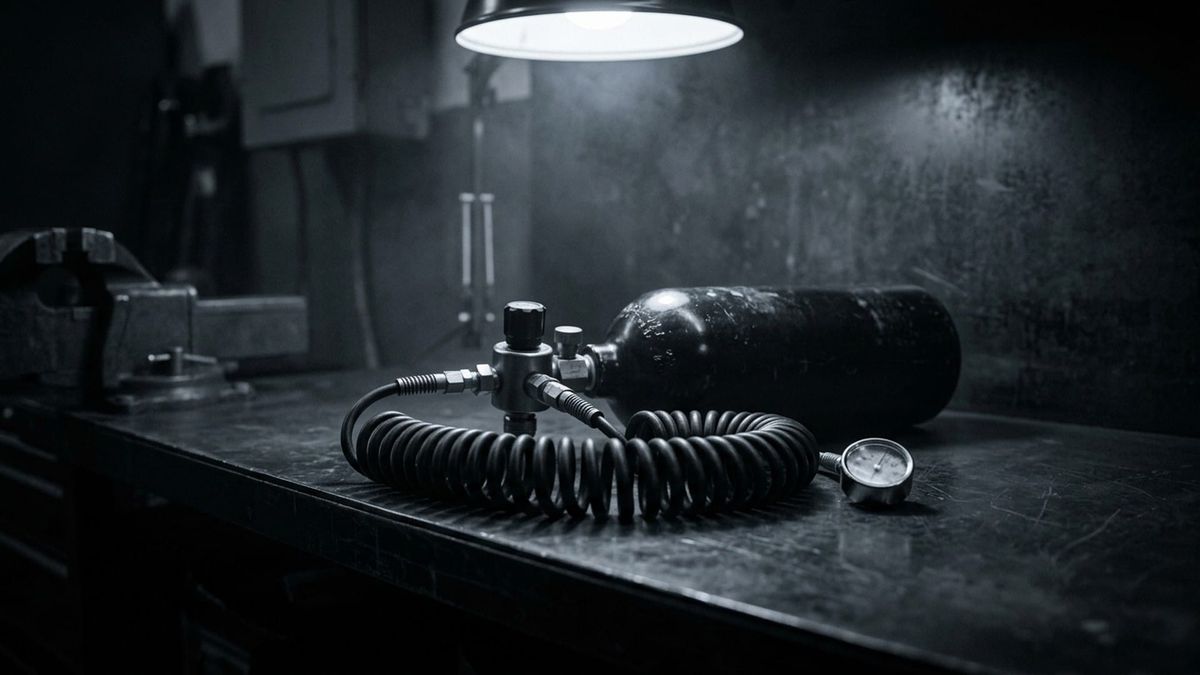
HPA stands for High-Pressure Air. Instead of using a battery to drive a gearbox (AEG) or expanding gas from a magazine (GBBR), an HPA system uses compressed air stored in a tank, regulated down to a usable pressure, and fed through a line into your gearbox or engine.
The key components are:
- Tank — holds compressed air (typically 3000 or 4500 PSI)
- Regulator — steps the tank pressure down to your operating pressure (usually 60-120 PSI)
- Line — connects the regulator to your gun
- Engine — the drop-in unit that replaces your gearbox (or the integrated system on an HPA-specific gun)
That’s it. Four components. Everything else is optional.
The Real Cost of Entry
The most common objection to HPA is price. Let’s break down a realistic starter kit:
| Component | Budget Option | Mid-Range Option | Notes |
|---|---|---|---|
| Tank (48ci/3000psi) | $50-70 | $80-120 (carbon fiber, 4500psi) | Carbon fiber is lighter but costs more |
| Regulator | $60-100 | $120-200 | The regulator is the most important component — don’t cheap out here |
| Line | $15-25 | $25-40 | Coiled vs. braided, both work |
| Engine (Wolverine, PolarStar, etc.) | $180-250 | $300-500 | Drop-in units that replace your gearbox |
| Total | $305-445 | $525-860 |
The budget end gets you a functional HPA setup. The mid-range gets you a lighter tank and a more consistent regulator. The engine cost is the biggest variable — some platforms have cheaper drop-in options than others.
The one place not to save: the regulator. A cheap regulator can have inconsistent output pressure, which means inconsistent velocity. That’s not just frustrating — it can take you over field limits. Spend the extra $40-60 on a known brand (Wolverine, PolarStar, Redline).
What You Can Skip
The HPA community loves selling accessories. Here’s what you don’t need on day one:
- Dual-tank setups — You’re not running a support gun yet. One tank is fine.
- Digital pressure gauges — The analog gauge on your regulator tells you everything you need.
- Quick-disconnect fittings — Nice to have, not necessary. The standard line connection works.
- Secondary regulator — One regulator per gun. You don’t need a secondary until you’re running multiple HPA platforms.
- Filled tank at purchase — Most fields and shops can fill your tank. You don’t need to buy a pre-filled tank.
The Real Advantage: Consistency
The reason experienced players switch to HPA isn’t rate of fire or trigger response — those are side benefits. The real advantage is consistency.
A well-tuned HPA system will shoot the same velocity on shot 1 as it does on shot 200. Temperature doesn’t affect it the way green gas does. Magazine temperature doesn’t matter. Cooldown doesn’t exist.
For players who compete, run MilSim events, or just hate the feeling of their gun “warming up” for the first few magazines, that consistency is worth the entry cost.
The Real Disadvantage: Logistics
HPA adds logistics to your day. You need:
- Access to a fill station (compressor or large tank at your field)
- A tank that’s within its hydrotest date (tanks expire — check the stamp)
- A way to carry the tank (tank pouch, backpack, or belt mount)
- Awareness of your air consumption (you can run out mid-game)
For casual weekend players, that logistics overhead might not be worth it. For regulars and event players, it becomes second nature after two or three outings.
Which Platform Works Best for HPA?
Not all airsoft platforms are equally good HPA candidates:
- AEG-based HPA (drop-in engine): The most common route. You keep your existing gun and replace the gearbox with an HPA engine. Works with most V2 and V3 gearbox shells.
- GBBR HPA (HPA-tapped magazines): Converts your gas magazines to run on HPA. More expensive per magazine but gives you GBBR recoil with HPA consistency.
- Dedicated HPA platform: Some manufacturers (Wolverine MTW, PolarStar Kythera) sell guns designed specifically for HPA. These are the most reliable but also the most expensive.
For a first HPA setup, the AEG drop-in route is the most cost-effective. Pick a gun you already own, buy a drop-in engine, and you’re running HPA for under $400.
Maintenance and Safety
HPA is safe when treated with respect. A few rules:
- Never exceed the rated pressure of your tank. The regulator is there for a reason.
- Hydrotest your tank every 5 years. It’s stamped on the tank. Expired tanks won’t be filled by any reputable field.
- Keep your regulator clean. Dirt in the regulator can cause inconsistent output.
- Lubricate your engine per the manufacturer’s schedule. Most engines need grease every 10,000-20,000 rounds.
Is HPA Right for You?
HPA makes sense if:
- You play regularly (at least twice a month)
- You want consistent performance regardless of weather
- You’re willing to carry a tank and manage air logistics
- You enjoy tinkering with your platform
HPA probably isn’t worth it if:
- You play once a month or less
- You prefer the simplicity of AEGs (plug battery, shoot)
- You don’t want to carry extra gear
- You’re on a tight budget (a good AEG will outperform a budget HPA setup)
Bottom Line
HPA isn’t magic. It’s a tool with specific strengths and specific trade-offs. For regular players who want consistency and are willing to manage the logistics, it’s a genuine upgrade. For casual players, a good AEG or GBBR is still the better choice.
The entry cost is $300-500 for a functional setup. The regulator is the one component worth spending on. Everything else can be budget-friendly on day one and upgraded later.
If you’re curious, find a player at your local field who runs HPA and ask to try it. Most HPA players are happy to let you shoot a few rounds. That’s the best way to know if it’s for you.
Have questions about getting started with HPA? Drop them in the comments — we’ll answer the most common ones in a follow-up post.