
I Fielded the DNT NVMD-C200 at a Night Game — Here's What Actually Happened
Real field test of the DNT NVMD-C200 digital night vision scope at Fontana Ranch. Day and night gameplay footage, battery life, and whether it replaces your LPVO and scope cam.
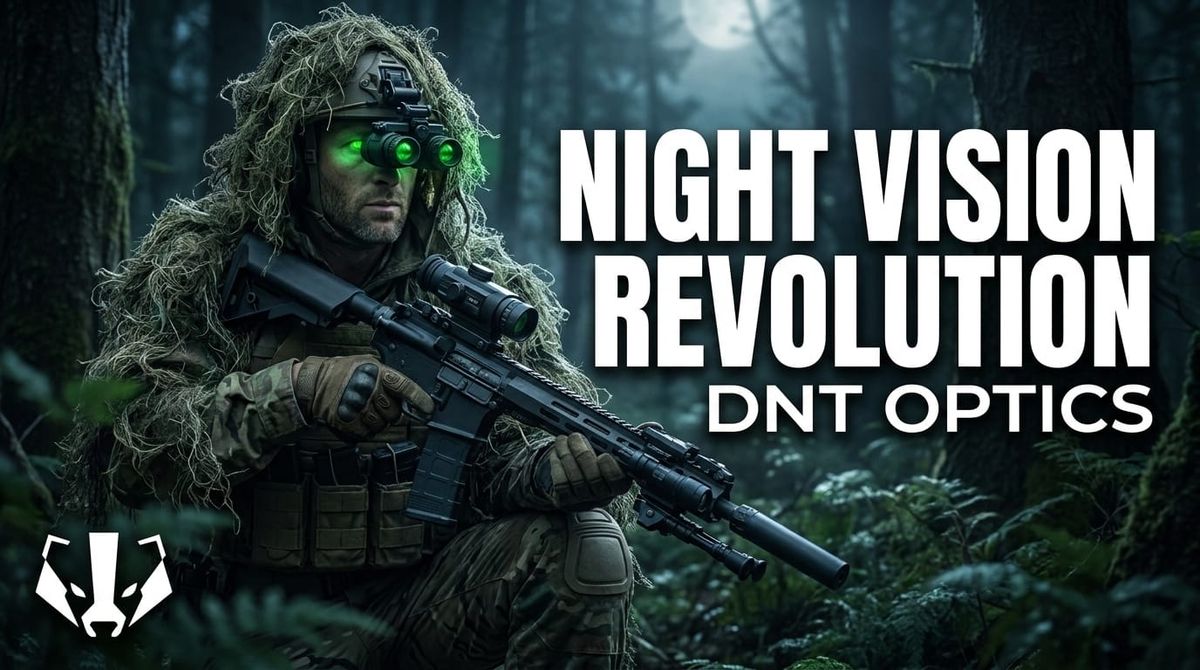
I Fielded the DNT NVMD-C200 at a Night Game — Here’s What Actually Happened
I have had the DNT NVMD-C200 for a few weeks now. I unboxed it, I tested the daytime features, I walked through the menus. But I had not done the one thing that actually matters: take it to an event and see if it holds up when people are shooting at you.
Fontana Ranch changed that. It is a brand new site in the Woodland Hills area of LA, run by a guy named Justice who has some serious plans for the place. The event ran day into night, which made it the perfect proving ground for an optic that claims to do both. Here is what I learned.
The Setup: No LPVO, Just the C200
My original plan was to run an LPVO on my MTW308 with the C200 mounted in front on a flip-to-side. That lasted about five minutes into prep. I looked at the setup and thought: why am I carrying two optics when this one does everything?
I ditched the LPVO. The C200 went on the rail as my primary — and only — optic. If this thing was going to fail, I wanted to find out without a backup optic to bail me out.
For the daytime portion I ran it on the MTW308 at around 500 FPS with heavy BBs. When night fell, I switched the C200 over to my WellPro WD-23 — a much smaller platform — and ran it there for the rest of the event. The swap took about thirty seconds. That adaptability is not something you get with a traditional scope.
Daytime: It Works, But Zoom Has Limits
During daylight the C200 functions as a 1-6x digital scope. The screen is bright enough for direct sun, and the reticle options give you a clean sight picture. The level indicator at the bottom of the display — showing whether your replica is canted left or right — turned out to be genuinely useful for longer shots where hop-up trajectory matters.
The 1x setting is true unmagnified, which matters when you are scanning for movement or clearing corners. Rotating the collar to zoom in is faster than an LPVO throw lever — there is no resistance, just a smooth electronic ramp from 1x to 6x.
But here is the catch: at 6x digital zoom, the image quality degrades noticeably. On the small built-in screen it looks fine. When you pull the footage onto a monitor, you see the pixelation. For filming purposes, you are better off staying at 1-3x and cropping in post. For actually aiming and shooting, the 6x is usable — you can identify targets and place shots — but it is not crystal clear at maximum magnification.
The MTW308 itself was not ideal at the longer ranges I was trying to reach. I got eliminations, but the platform was not delivering the consistency I wanted. That is a rifle issue, not an optic issue, but it is worth noting: the C200 will show you exactly what your gun is doing wrong.
Battery Life: Better Than Expected
I went into this event expecting to baby the battery. The C200 is a digital device with a screen, a sensor, and recording — that is a lot of power draw. DNT claims multiple hours of continuous operation, but I have heard those claims before.
Reality: the battery never dropped below 50%. I topped it off with a power bank between games out of habit, not necessity. The USB-C port is accessible even when mounted, so running a cable to a battery pack in a pouch is viable if you want all-day recording without touching the internal battery.
The instant-on button helps. You are not burning power while walking between objectives or sitting in the safe zone. Tap it off, tap it on, and the boot time is fast enough that you are not waiting around.
Night Vision: This Is Where It Gets Interesting
When the sun dropped, I switched the C200 into night vision mode. I ran green phosphor because I like the look and my actual nods are green phosphor, so the consistency helps my brain process what I am seeing. White phosphor is available if you prefer it, and there is a black-and-white mode as well.
The quality surprised me. Digital night vision has a reputation for being laggy and noisy compared to analog tubes, but the C200 held its own. I could identify teammates, spot movement through brush, and track BB flight at reasonable engagement distances. The IR laser from my PEQ unit showed up clearly on the display, which meant I could aim passively without illuminating myself with a visible laser.
I did not run the IR illuminator that comes in the bundle. With it, the image would have been significantly brighter — I was running on ambient light and whatever IR splash was coming from other players. The fact that it was usable without active illumination says something about the sensor sensitivity.
The zoom function at night is where the C200 pulls ahead of traditional night vision. With my analog nods, I cannot zoom in on something to confirm what I am looking at. With the C200, I can crank to 3x or 4x, identify a target, and then drop back to 1x for the shot. That capability alone changes how you play night games.
The Scope Cam Factor
The C200 records everything you see through the optic, including the reticle overlay. The footage is circular — scope-cam style — which looks great for content but limits its use as a general-purpose action camera. You are not replacing your GoPro with this.
Audio capture is adequate but not great. It picks up ambient sound, gunshots, and voices, but the quality is not what you would want for primary gameplay audio. The smart move is to record audio separately and sync in post, using the C200 audio track for alignment.
Internal storage is the one design choice I question. There is no external memory card slot — everything writes to internal memory, and you transfer files via the app or USB. I did not fill it up during the event, but I would much rather have the option to drop in a 512GB card and forget about storage management entirely.
DNT released a firmware update after I filmed this that improves night vision quality. The footage you see in my full gameplay video is pre-update, which means the current performance is actually better than what I am showing here.
The Real Value Math
The C200 base unit is around $800. The full kit with IR illuminator and flip-to-side mount runs about $980. That is not cheap. But let me break down what it replaces:
- A daytime LPVO or red dot: $150-400
- A scope cam like the RunCam: $150-200
- An action camera for POV footage: $250-400
- Entry-level digital night vision: $400-600
Add those up and you are in the same ballpark, except the C200 does all of it in one unit that weighs less than carrying four separate devices. Compared to my analog night vision setup — which cost around $3,500 — the C200 at $800 is a completely different category of investment.
What You Need to Watch Out For
Lens protection is the obvious concern. DNT has not tested the unit against BB impacts, and I did not volunteer to find out the hard way. A killflash or lexan shield is non-negotiable for airsoft use. I did not run protection at Fontana Ranch and got lucky — do not make the same call.
The digital display takes adjustment if you are used to glass optics. It is more like looking at a high-quality phone screen than peering through a traditional scope. In bright sunlight at certain angles, you may need to shade the display with your hand. Not a dealbreaker, but noticeable.
The circular footage format means you cannot use this as your only camera if you want traditional wide-angle gameplay shots. It is a scope cam first, an action camera second.
Bottom Line
The NVMD-C200 did what it claimed to do. It functioned as my primary daytime optic, switched seamlessly to night vision when the sun dropped, and recorded usable footage throughout. I did not baby it, I did not have it fail, and I did not find myself wishing I had brought a different optic.
For players who want night vision capability but cannot justify $3,000-plus for analog tubes, the C200 is the most compelling option I have tested. For content creators who want scope-cam footage without a separate camera, the recording function eliminates a whole piece of gear from your kit.
The firmware update improving night vision quality after my filming means the current version is better than what I experienced. I will do a before-and-after comparison in a follow-up, but for now: if you are on the fence about digital night vision, the C200 makes a strong case for jumping off it.